Writing

Ideas about AI, technology and building businesses.

Essays on where AI creates meaningful commercial value, how technology changes organisations, and what becomes possible as intelligent systems move into everyday work.

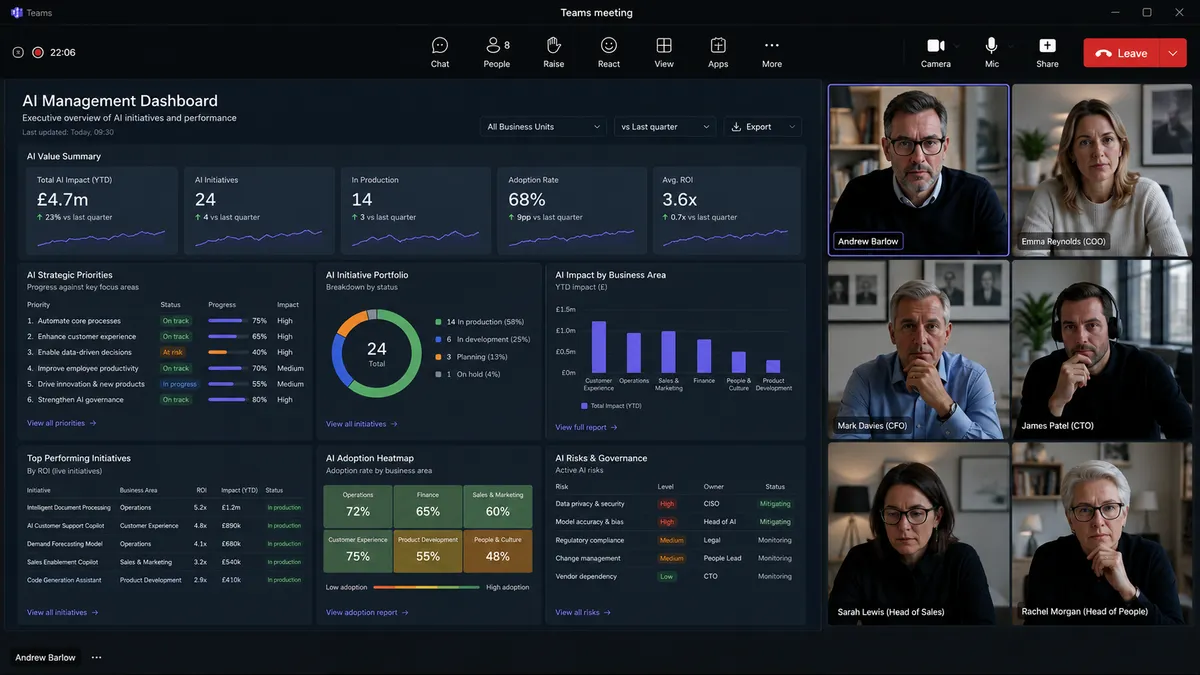
AI Is Becoming a Management Discipline

AI capability advanced dramatically in 2025. But as the technology becomes more powerful and widely available, the harder business question is shifting from what AI can do to how organisations decide where it matters.

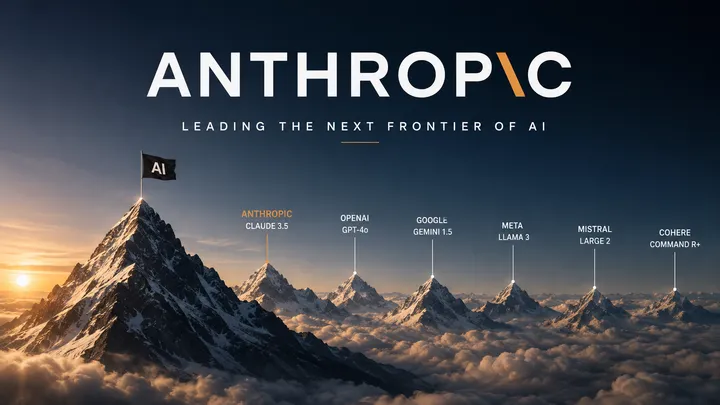
Intelligence Is Becoming a Commodity. Judgement Isn't.

AI is making increasingly sophisticated intelligence cheaper, faster and more widely available. If access to intelligence stops being scarce, competitive advantage may move towards something else: knowing what matters, what to ask and what to do.

Claude Is Becoming More Than a Chatbot

Anthropic's latest Claude models point towards a different relationship with AI: less about asking a model for an answer and increasingly about giving intelligent software a problem, tools and enough autonomy to work towards an outcome.

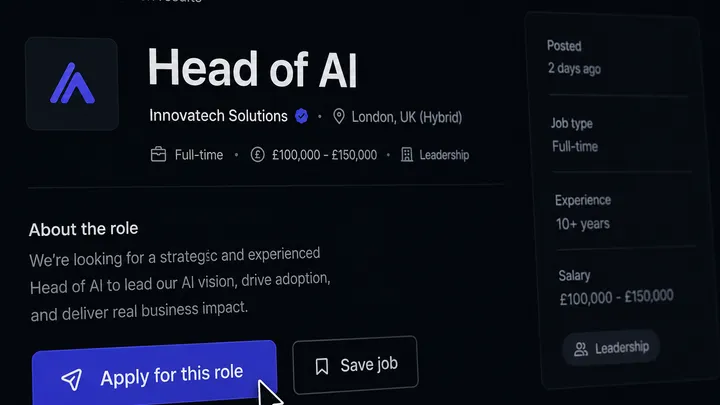
At Some Point, Someone Has to Own AI

As AI spreads across technology, workflows, people and business functions, responsibility can become fragmented. Creating value requires someone to connect those pieces and remain accountable for the outcome.

Your AI Strategy Depends on People Using It

Deploying AI doesn't create business value by itself. Value emerges when people change how they work with the capability, making employee behaviour, judgement and adoption part of the economics of AI.

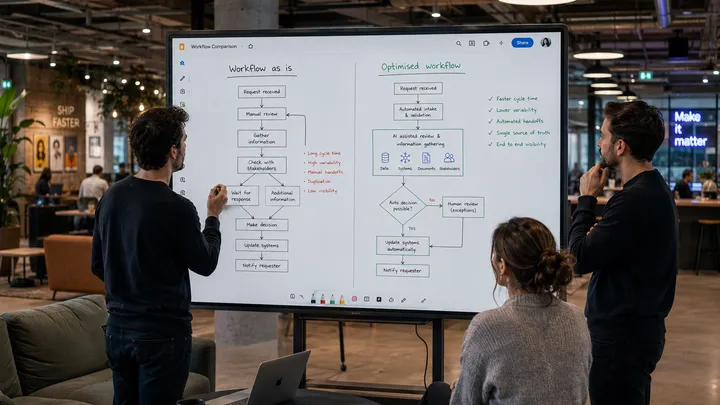
AI Won't Transform Work Unless the Workflow Changes

Most business processes were designed before today's AI capabilities existed. Adding AI to individual tasks can improve productivity. The larger opportunity may come from redesigning the workflow around what AI now makes possible.

Your AI Doesn't Know Your Business

Frontier AI models know an extraordinary amount about the world. They know remarkably little about your organisation. Connecting increasingly capable general intelligence to the context that makes your business different could become one of the most important AI implementation challenges.

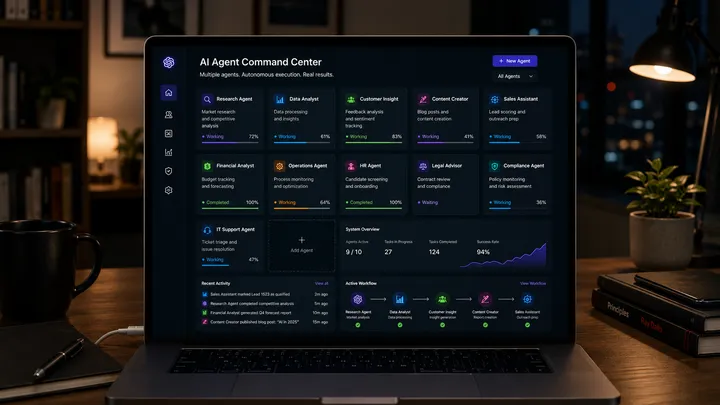
AI Agents Are Moving AI From Answers to Actions

Generative AI gave businesses increasingly useful answers. AI agents point towards something more consequential: systems that can reason about an objective, use tools and take actions towards completing it.

OpenAI o1 Changes What Businesses Should Ask of AI

Generative AI taught businesses to ask what machines could create. OpenAI o1 points towards a potentially more important question: what problems could increasingly capable reasoning models help businesses solve?

You Can't Pursue Every AI Opportunity

As AI becomes capable of improving more parts of a business, finding opportunities may become the easy part. The harder question is deciding which deserve scarce capital, leadership attention and implementation capacity.

Small AI Improvements Can Create Enormous Value

AI doesn't always need to transform a business process to create significant value. When an improvement affects enough revenue, decisions, customers or transactions, even a small change can have surprisingly large economic consequences.

AI Is More Than a Cost-Cutting Technology

The easiest AI business cases often involve saving time and reducing cost. But focusing too heavily on efficiency risks missing a much larger opportunity: using AI to increase what a business is capable of doing.

Some of Your Most Expensive Decisions Are Invisible

Businesses are good at measuring the cost of work, but often much worse at measuring the value of the decisions inside it. That could mean some of the largest AI opportunities are hiding in surprisingly small moments of judgement.

The Best AI Opportunities Start With Economics

The most impressive AI application isn't necessarily the most valuable. Finding the best opportunities means understanding the economics of a business first, then identifying where better intelligence can make the biggest difference.

Stop Starting With AI Use Cases

As businesses explore artificial intelligence, many begin by asking where they can use it. That may be the wrong place to start. The better question is where better intelligence could create meaningful economic value.

Your Competitors Don't Need Better AI Than You

As powerful AI becomes available to almost every business, access to the technology becomes less of an advantage. The real competitive gap may emerge between companies that merely use AI and those that learn how to turn it into economic value.

Conceptual editorial image illustrating a trajectory towards an uncertain, expanding horizon.

What If This Is Just the Beginning?

AI doesn't need to become superintelligent to have enormous economic consequences. If useful intelligence simply keeps getting better, cheaper and more accessible, businesses may need to rethink what is worth doing at all.

Conceptual editorial image illustrating how quickly assumptions about artificial intelligence can become outdated.

Your Mental Model of AI Is Already Out of Date

AI is improving quickly enough that an opinion formed six or twelve months ago may already be misleading. For businesses, the danger isn't only adopting AI too slowly. It's making decisions based on what the technology used to be capable of.

A smartphone displaying ChatGPT's working screen on a dark interface, with a coffee cup blurred in the background.

The Moment AI Changed

Artificial intelligence has been developing for decades. But something important has changed: powerful AI has moved out of specialist systems and into the hands of almost anyone who can type a question.