I have seen relevant enterprise sales opportunities lost before a proposal was ever submitted.
An RFP would arrive late in the process. The opportunity might be a good fit, but preparing a credible response meant finding information, interpreting requirements and bringing together specialists whose time was already committed elsewhere. We could see the potential deal. We could not assemble the response it deserved in the time available.
The constraint was the cost and capacity required to engage properly. That same constraint runs through enterprise selling: researching a prospect, understanding a transformation programme, preparing a tailored demonstration and keeping a proposal aligned as requirements change.
AI could change those economics. It can help find and interpret information a salesperson might never otherwise encounter, connect it with previous conversations and turn substantial project documents into useful preparation.
That matters to customers as much as suppliers. Better preparation should mean less time explaining publicly available basics, translating generic demonstrations into their own processes or repeating requirements to another member of the sales team.
As the effort required to deliver relevance falls, the standard customers should expect ought to rise. Sales leaders need to decide what they will do with that capacity—and whether their customers will notice any improvement.
Know enough to ask a better question
Timing is fundamental to selling. A relevant offering has little commercial value if you discover the opportunity after the important decisions have been made.
A company’s published strategy, investment announcements and changes in leadership can each provide useful context. Previous conversations may reveal priorities that never appear in public. Bringing that information together can help a supplier recognise where its capabilities might matter and when a conversation could be useful.
That is particularly valuable when you sell a broad portfolio. The work involves connecting what is changing in the customer’s business with the different ways you might help. A growth programme might expose an operational constraint. A technology investment might create an adoption challenge. Those connections give a salesperson something worthwhile to investigate.
Customers have businesses to run. They should not have to spend the opening half of a meeting explaining facts a supplier could reasonably have established beforehand.
Public research provides hypotheses to test. It cannot establish an undisclosed budget or explain every internal disagreement. Check the evidence behind an AI-generated brief, then use it to ask better questions.
The first substantive conversation should still be discovery-led. Listen. Understand why the customer is investing, what success would look like and what is getting in the way. Then replay that understanding and let them correct it.
Preparation earns you a better discovery conversation. Listening tells you whether you have understood.
The commercial gain comes from spending that conversation on the questions that matter, while there is still time to act on the answers.
Personalisation has to go deeper than the logo
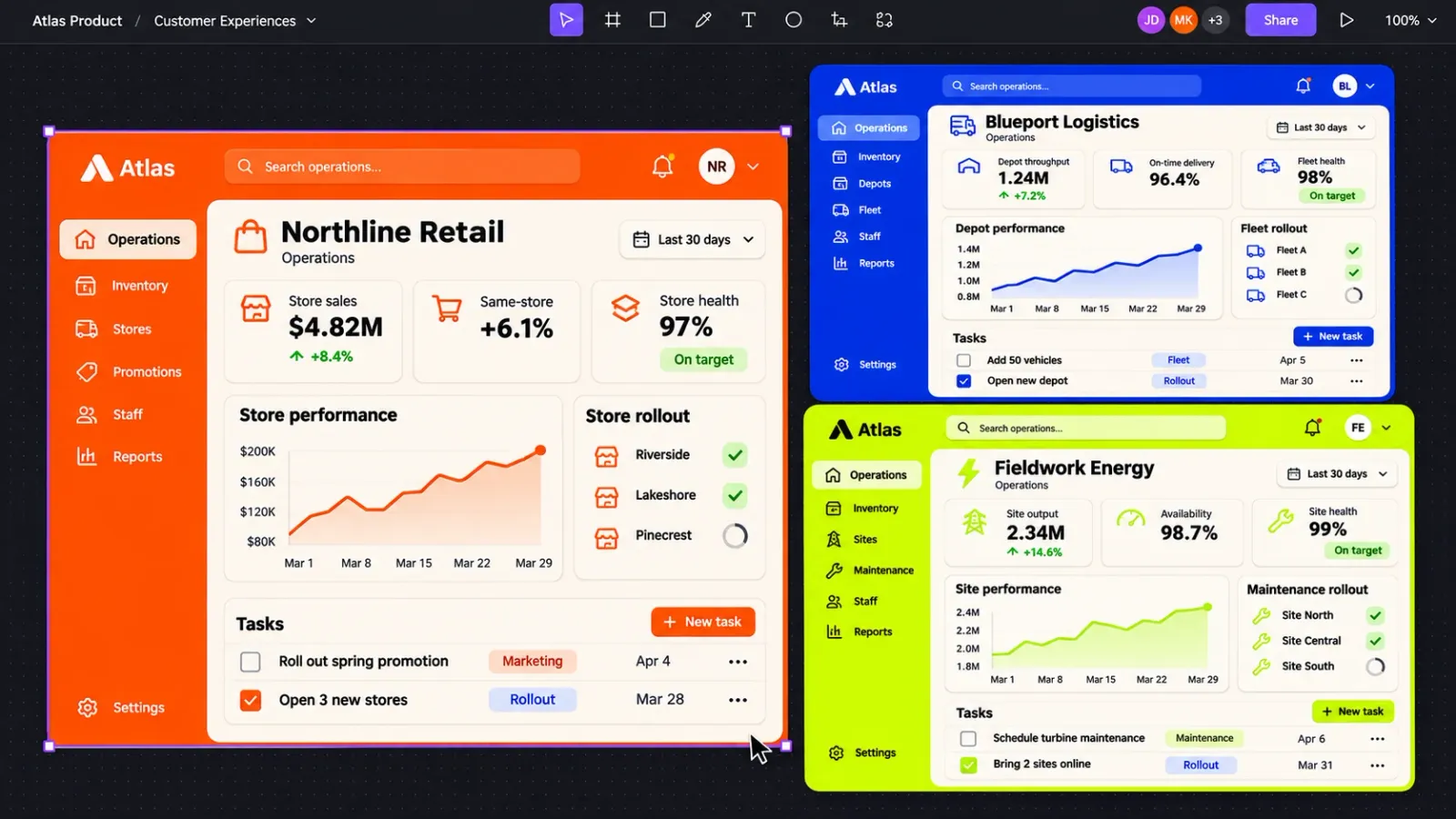
In enterprise SaaS, customers would ask us to reflect their branding, terminology and processes in presentations and demonstrations. They wanted to recognise their own business in what we were showing them.
Delivering that experience took considerable work. A sales leader might need a product specialist and colleagues with process or governance expertise. Someone had to interpret the discovery, build the presentation, prepare the demonstration and sometimes configure a sandbox environment.
I have seen customer project decks running to 40, 50 or 60 slides. Getting four or five supplier-side colleagues to absorb that material and develop a consistent understanding was a substantial coordination task before anyone started building the response.
That effort helps explain why extensive tailoring can be difficult to deliver consistently. Specialist time is scarce, and every engagement competes for it.
AI creates scope to reduce the repeated production work. Project documents can inform a shared brief. Confirmed requirements can guide demonstration scenarios, presentation drafts and interface mock-ups. The same project understanding can support different explanations for operational teams, a steering committee and a board approving the investment.
There are already concrete examples. In a Microsoft-published customer account, KPN describes using Copilot to adapt offer material to individual customers and summarise substantial RFP documents. These are practical uses of AI in the work of selling.1
The deeper opportunity is to help customers evaluate fit with less translation. A store manager, an operations director and a finance leader may need different views of a proposed retail system. Each should be able to see how the offering relates to their responsibilities and the outcome they are being asked to support.
Changing the logo achieves very little if the workflow underneath it remains irrelevant. The demonstration should make the proposed fit tangible, with mock-ups clearly identified and technical claims validated by the people responsible for delivery.
As the cost of preparation falls, the excuse for irrelevance falls with it.
The opportunity is to make relevant experiences easier to produce, with specialists concentrating on the difficult questions that determine whether the proposal will work.
Relevance has to survive the whole deal
A well-prepared first meeting is only the beginning. Customers should not have to explain the same requirement again when another specialist joins, or discover that the proposal has drifted away from what was agreed.
Complex deals evolve. A consulting partner may arrive partway through. Responsibilities change. New constraints emerge. Four separate transcripts do not automatically give a team a shared understanding of any of it.
The useful asset is a maintained account of the project: confirmed outcomes, requirements, stakeholders, decisions and unresolved questions. Customer statements need to remain distinguishable from supplier assumptions. Where recording is unwelcome, agreed notes and documents must serve the same purpose.
That understanding should shape what happens next. If the customer changes a requirement, the next demonstration and proposal should reflect it. Otherwise, the team is collecting information without allowing it to improve the sale.
AI agents offer a way to connect that understanding to the response work. A defined workflow can extract requirements, retrieve approved product information, assemble a draft and flag gaps for the relevant owners. Microsoft illustrates this approach in its RFP-agent scenario, which describes analysing requirements and adapting previous proposals.2 People accountable for product, security and commercial commitments still need to approve what goes to the customer.
Return to the late RFP. Reducing the work of interpreting requirements and assembling approved evidence could give the team a chance to evaluate an opportunity it would previously have declined. Fit, delivery capacity and time for review still determine whether it should bid. Response production should consume as little of that decision window as possible.
That is a revenue question as well as a productivity question.
What sales leaders should change
There is an obvious way to waste this opportunity: use AI to produce more generic material, faster.
A personalised opening sentence followed by the same irrelevant proposition does little for the buyer. Nor does a longer presentation assembled from an impressive quantity of research. Information only creates value when it changes the quality of the engagement.
I would start with one recurring sales situation where relevance is expensive to deliver: preparing for a discovery meeting, building a tailored demonstration or responding to an RFP.
Establish what the team needs to understand, where that information comes from and how the customer confirms it. Use AI to reduce the work of finding, interpreting and assembling the material. Give people clear responsibility for validating the result. Then assess whether the customer receives a better experience and whether the team can deliver it with less repeated effort.
Look at the time required to produce an approved response, the specialist hours behind a credible demonstration and how often customers have to repeat themselves. Ask which suitable opportunities are still being declined because the team cannot respond. Those measures connect the technology to the economics and quality of selling.
The most consequential moments in a complex deal remain human: listening carefully, challenging an assumption, earning trust and helping someone make a difficult decision. Better preparation and execution should give those moments more room.
Customers should be able to expect a supplier to arrive informed, understand what matters and carry that understanding through the sale. AI gives sales leaders greater scope to make that standard practical across more accounts.
Start by examining the experience your team delivers today. Where does the customer have to explain what you should already know? Where does a generic demonstration obscure a relevant capability? Where does work already completed get repeated because the team has lost track of what was agreed? Those are places to put the additional capacity to work.
The case for change is commercial: more relevant conversations, more credible proposals and fewer suitable opportunities abandoned because preparing a response costs too much time.
A customer should never have to do the work of discovering why your pitch matters to them. As AI makes preparation and tailoring more affordable, “we didn’t have time” becomes a weaker explanation.
The generic sales pitch will survive for as long as sales leaders accept it. AI gives them fewer reasons to do so.
Footnotes
-
Microsoft Customer Stories: KPN, 2 June 2025. ↩
-
Microsoft Adoption: Respond to an RFP agent. Illustrative workflow. ↩